 |
| My therapy pet, Kitty, and I. I am her favorite because I am the only one who pays enough attention to her. She is my favorite because she was by my bedside every day last fall. |

Me vs Colon
Monday, May 9, 2011
Home in the nick of time
I got went home two days before surgery. The last time I was home I was still sick and when I arrived yesterday all the smells and sounds of my house reminded me of the weeks and weeks I would rather forget. On the way to the hospital for my pre-surgery appointment, we drove by my internship from last summer and I remembered how hard it was for me to get there and how I should have just quit. I guess I'm glad I didn't though, because I won't be up to much this summer except bugging people, watching Netflix, doing crossword puzzles and playing my pity card for favors like free pizza (I didn't even ask for that, someone offered)!

Sunday, May 8, 2011
The Saga: Part 8 - Something you've never heard of
Of course, the immunosuppressants I was on did their damage. A week before I was scheduled to go to Oregon, I got a couple blisters on my eyelid that looked a little odd. I had been on the lookout for anything unusual because my doctor told me that I might catch something “strange” and told me that I had to live like I had HIV. Luckily, I didn’t often stray far from home so it wasn’t too hard to avoid people. As I was leaving for a week, I decided to go to the dermatologist, Dr. Dotz, before I left just to be safe. He was very alarmed and told me I either had shingles, herpes, eczema or impetigo. I didn’t even know it was possible to get herpes on your eyelid. Although I got a laboratory test done that would come back with results in a week, it was really important to treat shingles and herpes immediately because if they travel into the eye and into the cornea it is possible to go blind. I went to the ophthalmologist (they saw me RIGHT away so I knew it was serious) and they told me my cornea looked fine. My ophthalmologist told me to call right away if a sore appeared on the end of my nose because the nerve in the eye connects to the tip of the nose and that would be a sure sign of shingles. Dr. Dotz told me that he didn’t think I had shingles because it hadn’t dramatically spread, so it was my call if I wanted to take the huge dose of antibiotics used in the first 72 hours shingles symptoms appear to lessen their severity. After 72 hours, there is no point and shingles runs its course to the fullest. I decided not to take the shingles medication because antibiotics are absorbed in the intestine and can make UC much worse, even increasing the likelihood of catching C-diff, a severe bacterial form of Colitis that can be fatal if it is not treated correctly. In addition, it never leaves the body once you get it and can come back if you take serious antibiotics. My friend Ghislaine got it once and from then on every time she took antibiotics for strep throat, which itself is made more likely by taking immunosuppressants. It’s a vicious cycle. C-diff was also included in the almost-lethal mix my dad contracted two years ago, so I’m scared sh*tless. Bathroom humor! Anyway, Dr. Dotz cut the blisters open to take a sample for lab tests and then had me on a regimen of putting on various creams up to 9 times a day to treat my eyelid in case it was actually eczema or impetigo. It was an extremely sharp stinging pain that made me go slightly crazy. At the same time, pain like that simply doesn’t compare to abdominal pain because it doesn’t rip you from the inside out. A week later I got the results back, and I indeed had herpes on my eyelid. When I went back to make sure the coast was clear, Dr. Dotz told me that “we” had “done some good work.” He later told my dad that he had been really worried about me and I had “dodged a bullet.” I was lucky! Clearly, the team of doctors I had in California was truly excellent. I felt like my doctors really cared about me and were invested in the future of my health.
I also suffered from terrible insomnia with prednisone. The second time around (my first 10-week course had been the summer before) I had insomnia but didn’t have the incredibly energy or acne from the first time. Thankfully, my moon face didn’t get too moony either. After two weeks of not sleeping or sleeping one to two hours a night, my mom made me call Dr. Hosseini and tell him I was having a side effect. Sometimes I really needed other people to prompt me to take care of myself. Unfortunately, I couldn’t just stop taking prednisone because, other than the fact that it saved me from an extended one-month hospital stay (Dr. Hosseini threatened me with that when he was trying to get me to do a picc line), it has to be slowly decreased to prevent withdrawal. Sometimes I repeat myself in my blog posts because I doubt many people, other than my biggest fan George, read them all. Thanks George. So Dr. Hosseini wasn’t at all surprised and prescribed me with some Ambien. After a month it didn’t work as well so I had to alternate it with benadryl. Luckily, I had friends studying abroad in many different time zones of the world so someone was almost always on skype or gchat. I also didn’t have any events that I had to be super alert for and I wasn’t functional anyway. A few weeks later, as I decreased prednisone to more manageable levels, I was able to get to sleep all on my own.


The Saga: Part 7 - It gets better
Toward the two-month mark of azathioprine, my doctor, Dr. Hosseini, started preparing me for surgery in case azathioprine didn’t work. My general practitioner, Dr. Birnbaum, who is one of the most supportive and helpful doctors I have ever had, recommended that I go to UCSF for a second opinion (University of California at San Francisco), which has a worldwide reputation for surgery and general quality of care. Dr. Varma at UCSF told me that she doubted azathioprine would work since I had failed every other immunosuppressant and suggested either a clinical drug trial or surgery right away. I was still having serious symptoms like significant internal bleeding with high doses of prednisone, a bad sign. Most people are perfect with prednisone (although Dr. Hosseini reminded me once that some people do not even respond to prednisone, so I was lucky). The clinical drug trial was similar to Remicade and had an incidence of fatal brain damage. Dr. Hosseini took one look at me when I told him the situation and told me that I had been through too much to endure a clinical drug trial. I decided not to stop azathioprine because I only had two weeks left to the two-month mark and I thought it would be hasty and silly to give up so close the finish line. UCSF told me to call them if azathioprine didn’t work and I could have surgery in early December. Although consulting a surgeon was upsetting because it made surgery more real, it made both my mom and me feel better because we knew that it was a realistic option that would truly cure my disease. I would be in good hands at UCSF and unlike with Crohn’s disease, there was a way for me to get better one way or another.
As I started to get better from prednisone (keep in mind, I still was by no means functional and my functionality depended on high doses of steroids that were not sustainable) I wanted to leave my house after having been stuck there for over four months. And when I say stuck, I mean stuck. My dad had an architecture conference in Las Vegas so I invited myself. I wasn’t 21 and I couldn’t drink alcohol anyway but I didn’t care where I went as long as I went somewhere. I walked a little down The Strip but I couldn’t stand or walk for long. Still, the water fountain shows at the Bellagio were fantastic. When I walked down the street, I felt like yelling to the world, “I am walking down the street!! This is absolutely thrilling!” I wish I could recreate that feeling of being out in the world for the first time in so long and not being able to contain my joy. It’s almost how I imagine what it would be like to get out of prison; I had just been released from the prison of my own body. That absolutely pure happiness was so unforgettable that it was almost worth the traumatic months that preceded it. At the same time, the important luxury of health is being able to take those experiences for granted. I took a road trip with my mom to Oregon and I got to see beautiful Crater Lake. While I was in Oregon, I suddenly started to feel much better. I just felt…better. Although I was still in absolutely unbearable amounts of pain, I had more energy and I generally improved after morning bouts of sickness. I was a little more myself and my parents started to notice. I waited a while to tell anyone because I learned in August that crushed hopes of improvement are simply too devastating. I remember listening to the Beatles’ song “Here Comes the Sun” and thinking that my future was suddenly going to be much brighter. The azathioprine had started to work.
 |
| Crater Lake, two months after I started taking azathioprine |
 |
| My mom and her best friend from high school, the destination of our road trip of freedom |
 |
| Me at Hoover Dam outside of Las Vegas |
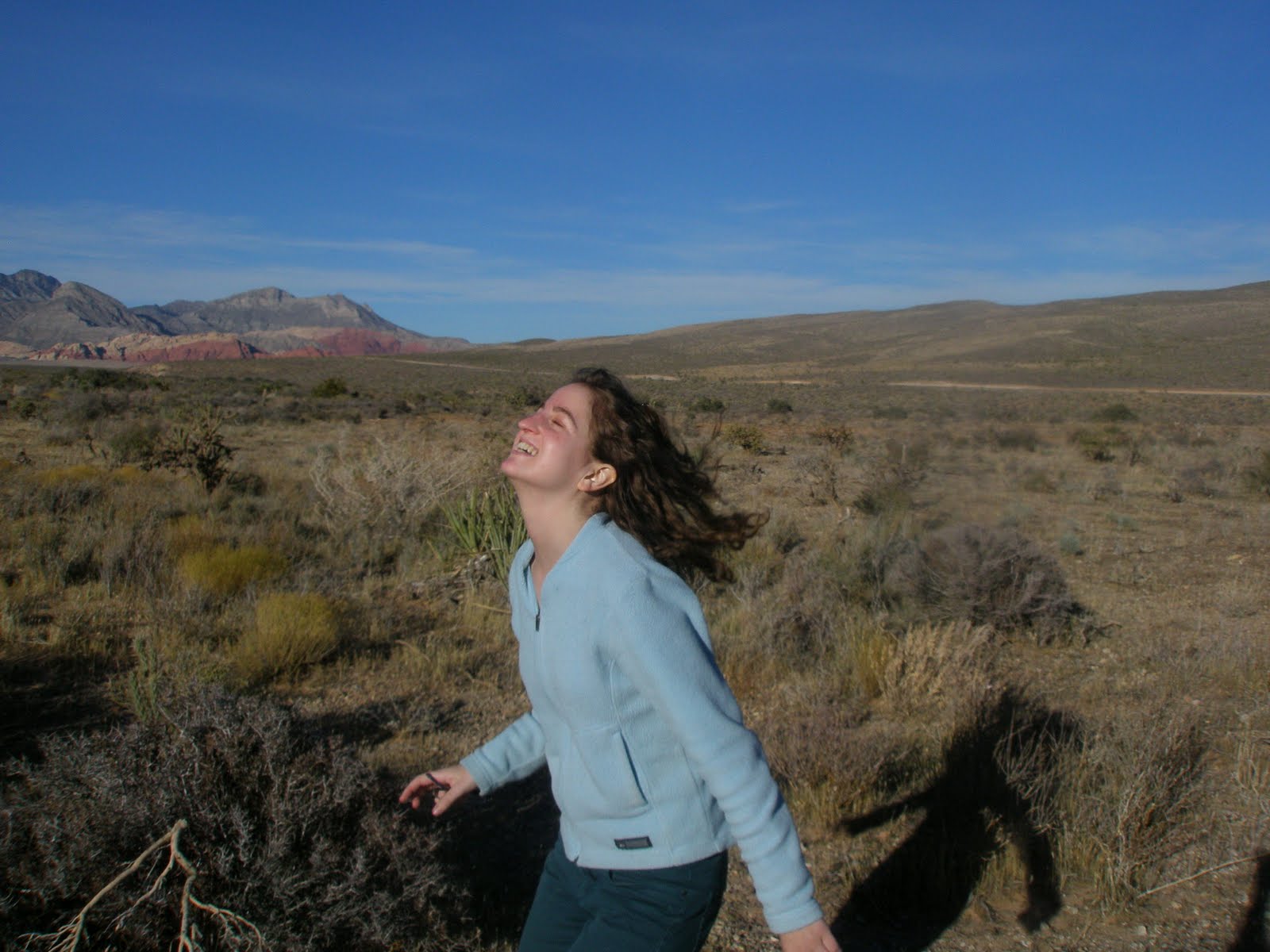 |
| In the desert, enjoying being out in the world |
The Saga: Part 6 - Hospitals Can Be Fun
Although things looked pretty grim when I headed to the hospital, my daily quality of life turned around when I made that decision. The secret to getting seen quickly is to mention some chest pain (or paint some fake blood all over your head). I had a relatively short stay in the ER, where the doctors gave me morphine, liters of water and put me back on a high dose of the corticosteroid prednisone. One of the reasons my GI told me over and over to check in to the hospital was that he suspected I was very dehydrated - just do the math with how many bathroom trips I was making a day. When I was still thirsty after receiving two liters of water through an IV in the time span of one hour, my ER doctor raised his eyebrows and said, “You are VERY dehydrated.” He decided that the infusions of Remicade just weren't working and agreed with Dr. Hosseini that I "would not make it" (I still don't know what that meant) until the immunosuppressant pill Azathioprine might kick in a few months later. You might be wondering why not combine Remicade, Azathioprine and Prednisone. Since they are all heavy-duty immunosuppressants, the risk of life-threatening infection goes through the roof if all three are combined. You might also be wondering why my doctor didn’t take me off Remicade sooner and switch me to Prednisone. The problem was that I had responded a little to Remicade and we all hoped that I would improve after more infusions. Unfortunately, I simply couldn’t make it through the waiting period. In addition to Ulcerative Colitis that was out of control, the ER doctor thought that I might have had a stomach ulcer that went undiagnosed for months. Since my stomach always hurt, I didn’t think that it hurting more than usual was significant.
My hospital stay was entertaining as there were guards stationed everywhere. My dad did some strategic eavesdropping and discovered that there were some psychotic patients. I could have told him that! They were being strapped to their beds and screaming! Anyway, that provided a welcome distraction. Before I left, I convinced the doctors to give me an extra dose of morphine and I felt absolutely amazing. Sometimes people ask me what morphine is like and the best adjective I could use to describe it is "nice." Although the way it makes you drift in and out of awareness is a little unsettling, it's a wonderful break from the stress of physical pain. When I arrived home, the two British exchange students who live with my parents asked me how I was - I do not remember this, but this is what they tell me. I apparently answered, "I'm on morphine!" as if that would mean something to them.
The next day I felt exponentially better. I started eating again and I was happy. Although I couldn’t going back to DC because there wasn’t enough time left in the semester for an internship, I called my congressional internship from the summer and made an arrangement to come back in a couple days per week. They apologize a couple times when they gave me boring tasks like filing, but all I could tell them was that I was so thankful not to be at home in bed that I would find pretty much anything, even filing, intellectually stimulating. Plus, instead of being one solider in an army of interns, I was the only intern on the days I went in. I got to know the staffers really well and I got to meet with some interesting constituents and interest groups.
The other days of the week I went to the doctor or the lab to get tests done. When I first started taking azathioprine, I had to get tests done at least once a week to make sure that my liver, iron levels and blood cell count were satisfactory. I got tested for the bacteria responsible for 50% of stomach ulcers but I didn’t have it. The pain between my ribs started to come back and my doctor put me on a stomach ulcer medication that made me feel better and that I still take, eight months later. To this day, when I stop taking it the pain comes back.
Friday, May 6, 2011
The Saga: Part 5 - It gets worse
When I finally decided to take a semester off, I felt less pressure to get better. I just let my health run its course and relaxed. I spent afternoons in my garden and waited until my parents got home from work. Berkeley has "Indian summers," which means that September and October are hotter than the summer months. Counting on getting better in a few weeks, I hoped to find an internship in the Bay Area or go back to DC and stay in an off-campus room I had rented for the fall. In mid-September, Dr. Hosseini had me start taking the pill Azathioprine, which takes months to take effect. He strongly encouraged me to gain weight so that I could increase the dosage. At that point I weighed about 100 pounds. He hoped that Remicade infusions would carry me for the next couple months until the Azathioprine kicked in. At that point I was on both Remicade and Azathioprine, and the plan was to stop Remicade once Azathioprine worked. The combination is highly discouraged on account of side effects like lymphoma and some doctors won't even let their patients combine them for any amount of time.
 |
| Flag fun |
In September I also started my famous flag project. I wanted something to do but I couldn't go anywhere or do anything that required significant thought power. I don't know the flags of the world as well as I should, and since I had more time than anyone should ever have, I thought that drawing them by hand would be a great idea. When friends came to visit it gave us something to do together and I didn't have to entertain them. They didn't say anything about my health, but I could tell they were concerned. I was able to function in the little world that I had created for myself, but I was nowhere near normal. Of course, I didn't know that at the time. I spent my days trying to sleep, trying to fight pain, and trying to eat. And although I don't like to mention it, I went to bathroom 10 to 20 times per day and needed to be near one at all times. That really limited where I went! My parents set up a card table in my room for me to do jigsaw puzzles. I went through a couple per week. I disliked my dad's puzzle style - he goes for color instead of shape, and it looks like he is stabbing the puzzle when he tries to get a piece in. At least I was present enough to be annoyed!
My sister came home for a few weeks and she set up a weight gain chart to encourage me to eat more. It didn't really help me because I started to lose about half of a pound per day. The chart just went down and down until I stopped plotting data points. I weighed myself every morning and I eventually started lying about it to my parents. I felt like I was disappointing them and I had started to give up on eating. It was just so difficult and unpleasant that I would rather do anything else. I simply couldn't will myself to swallow. My mom didn't understand why I couldn't eat and I didn't either. When I got down to 93 pounds, I just started crying. I didn't know what was happening and I had no idea how to stop it. My mom couldn't convince me that I wasn't eating enough so she decided to have me keep a food diary. I realized I was taking in 200 to 300 calories per day. I had always been able to accomplish what I wanted to with my will, but suddenly I couldn't, and my life was on the line.
Dr. Hosseini decided he wanted to make sure (for the third time) that I didn't have Crohn's disease because my colonoscopy in August had shown a "giant cell" and unusual depth of the ulcers in the tissue in my colon, both things almost always associated with Crohn's disease and not UC. This time I got to do a capsule endoscopy, which is actually really cool. Dr. Hosseini wanted to check to see if I had ulcers in my upper intestine - which would mean I had Crohn's - so he didn't need to make me go through another colonoscopy. Instead, I swallowed a pill that had a blinking light and a camera. I did the same prep for a colonoscopy but I was allowed to eat a couple hours after I swallowed the pill. The nurses taped transmitters on my stomach that recorded the pictures the camera took and stored them in a device that I wore as a belt. After eight hours, I went back to the doctor's office. They took the device back and took off the receptors. A week later, Dr. Hosseini told me that he had reviewed the film (your dream job, right?) and I definitely did not have Crohn's. That was a relief!
Dr. Hosseini decided he wanted to make sure (for the third time) that I didn't have Crohn's disease because my colonoscopy in August had shown a "giant cell" and unusual depth of the ulcers in the tissue in my colon, both things almost always associated with Crohn's disease and not UC. This time I got to do a capsule endoscopy, which is actually really cool. Dr. Hosseini wanted to check to see if I had ulcers in my upper intestine - which would mean I had Crohn's - so he didn't need to make me go through another colonoscopy. Instead, I swallowed a pill that had a blinking light and a camera. I did the same prep for a colonoscopy but I was allowed to eat a couple hours after I swallowed the pill. The nurses taped transmitters on my stomach that recorded the pictures the camera took and stored them in a device that I wore as a belt. After eight hours, I went back to the doctor's office. They took the device back and took off the receptors. A week later, Dr. Hosseini told me that he had reviewed the film (your dream job, right?) and I definitely did not have Crohn's. That was a relief!
At each doctor's visit my doctor began to tell me to go the hospital if symptoms persisted. Each time I would clarify, "You mean, if they get worse?" He would say, "No, if they stay the same." Well, I thought, I can ignore that piece of advice. I was surviving and I didn't think there was a limit to what I could withstand. Hospitals are dangerous places that are much less comfortable than home. I could get Mersa or C. diff, common infections in hospitals that can be worse than what the patient came in for in the first place. My doctor got the picture and filled out a form for a picc line, which is an IV of sugar and water administered by a home nurse. It is long, slender, small, flexible tube that is inserted into a peripheral vein, typically in the upper arm, and advanced until the catheter tip terminates in a large vein in the chest near the heart to obtain intravenous access. I called my friend Ghislaine (pictured previously) who had experienced a picc line in the hospital. She told me, "Don't get a picc line! They are the worst! One of my veins collapsed. Just eat, eat, eat. You can do it." Well, I thought, I'll just have to try harder.
A few weeks later I suddenly got significantly worse. I threw up during the day. I started waking up in the middle of the night to throw up. I threw up when there was nothing left to throw up. I started having a terrible pain between my ribs that I mistook for chest wall inflammation. I started taking Vicodin around the clock but it wasn't good enough. Previously, I had taken Vicodin every other night so that I could sleep (otherwise I could not sleep on account of the pain). Then I switched to oxycontin. But since I was throwing up all the time, I couldn't keep the pain killers down for long. As I sat in the bathroom one afternoon, I realized that I wouldn't mind not being alive. It wasn't like I wanted to kill myself, I just for a moment felt indifferent to being alive. I had never felt that way before because every second I was alive was precious to me. Living is just beyond belief! So at that moment, I decided that I absolutely had to go to the hospital because not wanting to live, even if just for a second, was the worst thing that had ever happened to me.
Thursday, May 5, 2011
Preview
 |
| My friend Ghislaine after the first surgery. She looks happy because she was on morphine. The bandage is over the stoma, which is the upper intestine turned inside out. My future in four days! |
 |
| Ghislaine's upper intestine a while after the first surgery. Not for the faint of heart. |
Wednesday, May 4, 2011
What I Look Forward to After Surgery
1. Not waking up every morning in pain and being able to sleep in.
2. Not being tired all the time.
3. Being able to go from one place to another without going home to rest in between.
4. Being able to eat a wider variety of things: peaches, tomatoes, pizza, french fries, salad, steak, ice cream, milkshakes, hamburgers, chocolate milk, apples, celery.
5. Parties!!!
6. No more infusions or endless pills.
7. Having a badass scar.
8. Not feeling like I have the flu all the time.
9. Being able to say "I am doing well" when someone asks and really mean it.
10. Staying up late (I get too tired now)
11. Taking walks.
12. Working out.
13. Playing soccer.
14. Going out to eat in restaurants.
15. Taking public transportation and having adventures in the places I live - San Francisco, DC.
16. Not feeling nauseous when I eat.
17. Eating because I want to, not because I have to.
18. Talking about things other than my disease with my friends.
19. Having problems that don't actually matter in the big scheme of things.
20. Seeing my parents happier because they won't have to worry so much about me.
2. Not being tired all the time.
3. Being able to go from one place to another without going home to rest in between.
4. Being able to eat a wider variety of things: peaches, tomatoes, pizza, french fries, salad, steak, ice cream, milkshakes, hamburgers, chocolate milk, apples, celery.
5. Parties!!!
6. No more infusions or endless pills.
7. Having a badass scar.
8. Not feeling like I have the flu all the time.
9. Being able to say "I am doing well" when someone asks and really mean it.
10. Staying up late (I get too tired now)
11. Taking walks.
12. Working out.
13. Playing soccer.
14. Going out to eat in restaurants.
15. Taking public transportation and having adventures in the places I live - San Francisco, DC.
16. Not feeling nauseous when I eat.
17. Eating because I want to, not because I have to.
18. Talking about things other than my disease with my friends.
19. Having problems that don't actually matter in the big scheme of things.
20. Seeing my parents happier because they won't have to worry so much about me.
Subscribe to:
Posts (Atom)